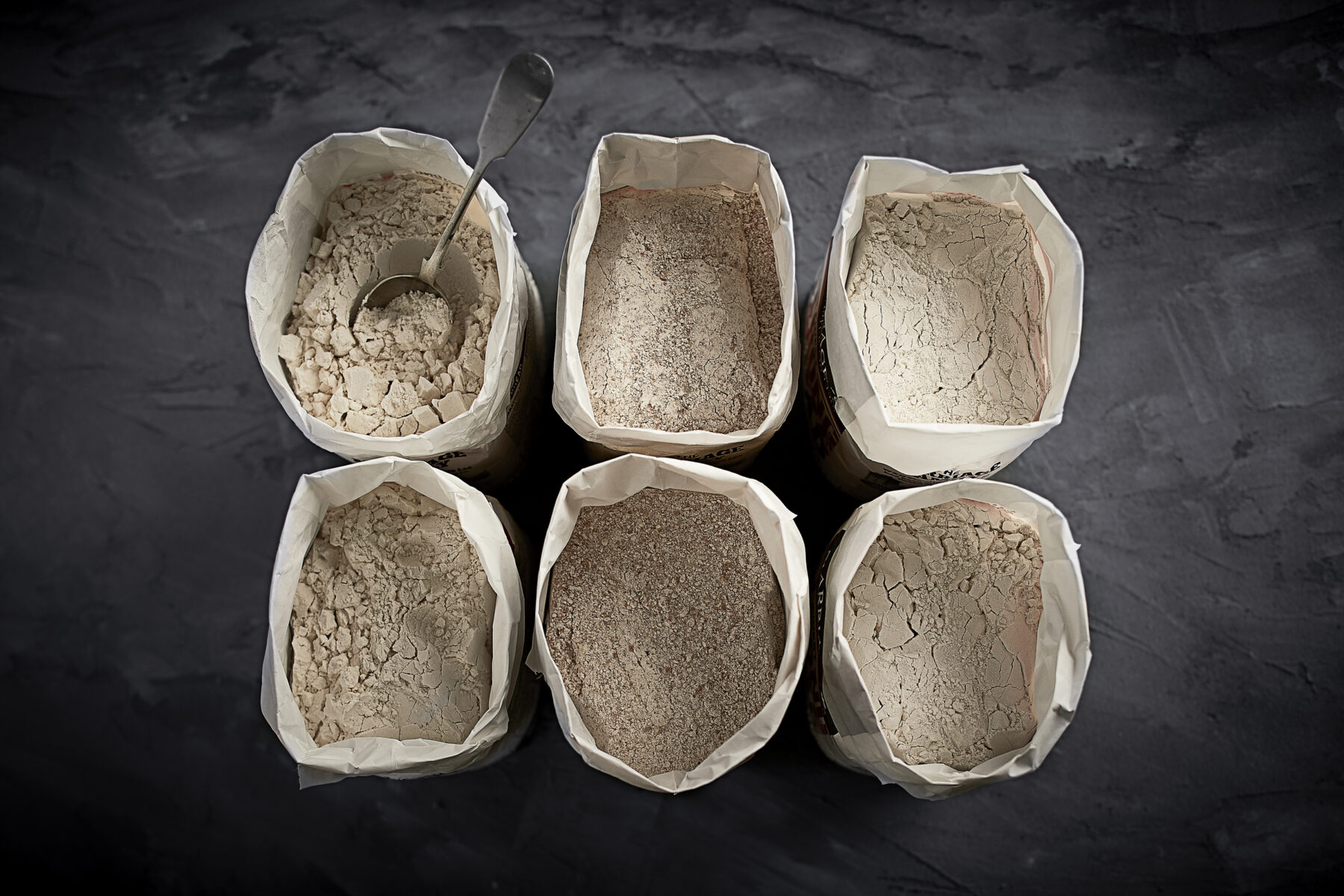
The majority of the wheat we use is sourced from local farmers in Essex. We also source UK wheat from farmers in Suffolk, Kent, Sussex and Hertfordshire.
We import higher protein wheat from outside the UK, such as Canadian Western Red Spring wheat from Canada.
Our organic wheat is sourced from throughout the world to achieve a similar quality and performance to our conventional range.
Wheat growing in the field is naturally exposed to a wide variety of potential germs, and as such we recommend to always cook items made with raw flour before eating them. We would advise against eating raw dough or batter and would not recommend giving play dough made with raw flour to children.
Stoneground wholemeal flour is made in the traditional way – using our hundred year old horizontal French Burr stones – rather than the roller milling process.
Why is ‘Strong’ flour used for bread making?
Strong flour is produced from hard wheat varieties, which have higher protein contents than plain and self raising flour. Strong flours can be white, wholemeal or malted. The high protein (gluten) content of strong flour ensures dough rises well and that it keeps its shape once it has been baked.
Type OO, Type O, T55, T65 flour are colour measurement grades of flour used outside the UK. The colour measurement is based on the ash content, which is measured when a sample of flour is burnt and the leftover ash is weighed).
For example, with a T55 flour – the 55 denotes 0.55% ash. This means that a T55 French flour is whiter than a T65 flour, which has 0.65% ash.
In the UK we are legally required to add fortification. This impacts the ash content therefore in the UK we class flour by strength rather the colour.
The colour of the flour does not match the strength of the flour. “OO” grade Italian flour can be for pasta (high protein) or cakes (low protein).
We recommend using our Very Strong 100% Canadian White flour for pizza and pasta making due to its high protein content.
None of Marriage’s flour is bleached – it is illegal to bleach flour in the UK.
Plain flour is for general baking and cooking. It can be white, brown or wholemeal. It is an all-purpose flour so can be used for pastry, batters, pancakes, biscuits and thickening sauces.
Self Raising flour can be white, brown or wholemeal flour, and has baking powder added. Self Raising flour is used for baking where a cake needs to rise – for example in recipes for scones, muffins and cakes.
We add some ingredients to our flour, either for legal necessity or to provide benefits to bakers using the flour. Below is a list of ingredients we add and the purpose they serve.
In 2014 the Food Information Regulations were implemented. This meant that some previously undeclared ingredients were now required to be declared on consumer packs, such as the flour statutory additives.
The protein content refers to the amount of gluten that can be formed using the flour. Gluten provides structure and aids the texture of your bread or cake. Gluten helps create structure and determine texture in your final baked good. Higher protein flours are normally recommended for bread making and cake making flours have lower protein contents.
The Red Tractor logo is an assurance that our products have met the Red Tractor assurance standards and are of a UK origin.
Marriage’s mill two Organic Light Brown cake flours (Plain and Self Raising). These used to be called our ‘81%’ flours as they contain about 81% of the original wheat grain; we mill white flour, and then add some of the fine bran and wheat germ from the same wheat back in. This means that these flours retain the flavour of wholemeal but are as easy to use as white flour – without the leaden texture you can sometimes get when baking using wholemeal cake flours.
Our white flours have a best before by period of 9 months and our wholemeal flours have a 6 month best before by date.
Our flour can be stored in its original packaging or in an air-tight container in a cool dry place. Do not mix old and new flour. If moisture gets into the flour, it may become clumpy.
In some cases flour can attract psocids (or flour weevils) which can live in dry foods. These are not caused by poor hygiene but prefer to live in dark and warm places such as packaging or food cupboards. Flour is unlikely to be the source of the infestation but provides the perfect habitat for them.
No, it is not necessary although some recipes recommend doing so in case flour has settled whilst being stored and transported, or to remove any impurities.
The Alveograph W value is commonly used in Europe to determine the strength of flour.
The Alveograph test is not commonly used in the UK, protein is generally used instead. The limited testing that we have done would indicate that our general strong breadmaking flours are around 350.
We produce a range of Organic flours and they are approved by the Organic Food Federation to produce organically certified flours to the correct standards.
We recommend using our Strong White or Organic Strong White flour for pizza and our Very Strong White Canadian for pasta making due to its high protein content.





 Back to all